

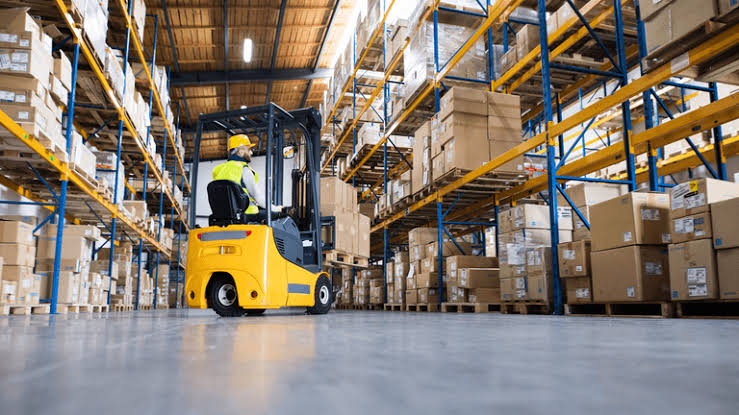
The Strategic Role of Warehousing in Modern Cargo Logistics: Beyond Storage
By Midway Cargo Logistics
In the fast-paced world of global trade, the journey of a product is often visualized as a line on a map—a truck moving down a highway, a ship crossing an ocean, or a plane soaring through the clouds. However, the silent engine that drives supply chain efficiency is not always the movement itself, but the pause between movements.
At Midway Cargo Logistics, we understand that a warehouse is not just a “box” where goods sit idle. It is a dynamic command center for inventory management, risk mitigation, and distribution. For businesses utilizing our cargo tracking platform, understanding the role of warehousing is key to optimizing your entire logistics strategy.
Here is how professional warehousing integrates with modern cargo tracking to create a seamless supply chain.
1. The Hub-and-Spoke Efficiency
Warehousing is the central nervous system of the “Hub-and-Spoke” model. Rather than shipping goods directly from a factory to a customer (which is often costly for LCL shipments or small parcels), goods are transported in bulk to a central warehouse.
From there, they are broken down, repackaged, and dispatched to their final destinations.
- The Tracking Link: When your cargo moves from “Port of Discharge” to “Warehouse,” it is not the end of the journey; it is a transfer of responsibility. Midway’s tracking system ensures that you know the exact moment your cargo is checked in, docked, and logged into our Warehouse Management System (WMS). This visibility eliminates the “black hole” that often occurs during transshipment.
2. Inventory Buffering and Demand Planning
Market demand is rarely perfectly predictable. Seasonality, promotions, or supply chain disruptions require a buffer.
Professional warehousing allows importers to store safety stock closer to their end customers. Instead of waiting for weeks for a new production run to arrive from overseas, businesses can fulfill orders within days from local warehouse stock.
- The Tracking Link: With real-time tracking, you can monitor your “Stock on Hand” levels. When our system shows your goods have been physically received and scanned into the warehouse, your sales team can confidently sell that inventory, knowing it is available for immediate dispatch.
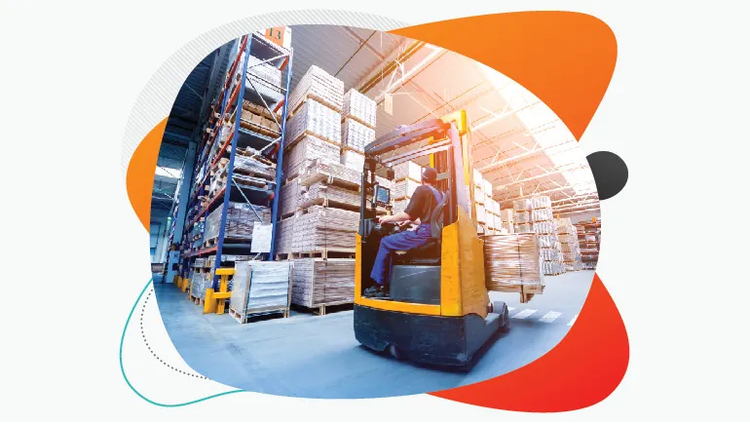
3. Value-Added Services (VAS)
Modern logistics goes beyond moving boxes; it involves moving ready-to-sell products. Warehouses have evolved into light manufacturing and finishing centers. Services include:
- Labeling and Barcoding: Applying destination-specific retail labels.
- Kitting: Bundling multiple items into a single sellable unit.
- Quality Control: Inspecting goods for damage before the last-mile delivery, saving return costs later.
- The Tracking Link: In the Midway platform, these services are tracked as “Milestones.” You don’t just see “In Warehouse”; you see “In Warehouse – Labeling in Progress” or “QC Passed.” This granular data provides peace of mind that your cargo isn’t just sitting—it is being prepared for market.
4. Reducing Dwell Times and Demurrage
One of the most expensive pitfalls in logistics is container demurrage and port storage fees. When a container is offloaded at a port, the clock starts ticking. If there is no immediate truck or warehouse to receive it, costs skyrocket.
A pre-planned warehousing strategy ensures that containers are immediately drayed from the port to a storage facility, bypassing expensive port fees.
- The Tracking Link: Our system flags “Dwell Time” alerts. By tracking the container status, we can trigger pre-booked trucking to move your cargo to Midway’s warehouse yards before the free time expires, saving you thousands in penalty fees.
5. The Technology Integration: WMS vs. TMS
The true power of modern logistics lies in the integration of Warehouse Management Systems (WMS) and Transportation Management Systems (TMS) .
At Midway, our tracking platform bridges the gap between these two worlds:
- Physical Visibility: Cameras, scanners, and RFID tags tell us what is inside the warehouse.
- Transit Visibility: GPS and AIS data tell us where the truck or vessel is.
- Unified Data: Our customers see both on a single dashboard.
When a truck arrives at the loading dock, the WMS tells the loader exactly which pallets to load. Simultaneously, the tracking system updates the customer’s ETA to the final destination.
The Midway Advantage: A Partner, Not Just a Provider
Choosing a warehouse is a decision about trust. When you entrust your cargo to Midway Cargo Logistics, you are securing a strategic partner dedicated to the velocity of your business.
Why partner with us?
- Security: 24/7 monitored facilities with strict access control.
- Flexibility: Short-term and long-term storage options for both FCL and LCL shipments.
- Transparency: API integrations that sync our warehouse data directly into your ERP system.
- Location: Strategically located facilities to reduce last-mile delivery costs and times.
Conclusion
The global supply chain is a relay race. The handoff is just as important as the sprint. Warehousing is where cargo catches its breath, gets re-energized, and prepares for the final sprint to the customer.
Don’t view warehousing as a static cost; view it as a dynamic tool for speed and customer satisfaction. With Midway Cargo Logistics, you don’t just store your goods—you manage your business.
Ready to optimize your storage and distribution strategy?
[Contact Midway Cargo Logistics Today for a Quote] (link)
SEO Keywords Integrated:
- Cargo Tracking
- Warehouse Management System (WMS)
- Supply Chain
- Logistics
- Inventory Management
- Demurrage and Detention
- Distribution
- Freight Forwarding
- Value-Added Services
- Hub-and-Spoke
Why this works for a Cargo Tracking Website:
- Connects the Physical and Digital: It emphasizes that the tracking data they offer corresponds to real physical actions inside the warehouse.
- Establishes Authority: It shows that Midway understands not just the “transport” part, but the “storage” part of logistics.
- Adds Value: It educates the customer on why their cargo is sitting in a warehouse and why that is a good thing (cost-saving, quality control).